
The Truth About “Deleted” Text Messages on Smartphones
I got a call last week from an attorney who sounded pretty frustrated. His forensic expert had just testified that “the defendant deleted approximately 200 text messages” based on gaps in the message database. The opposing expert completely disagreed. Now my client was caught in a battle of the experts, and nobody was explaining things in plain English.
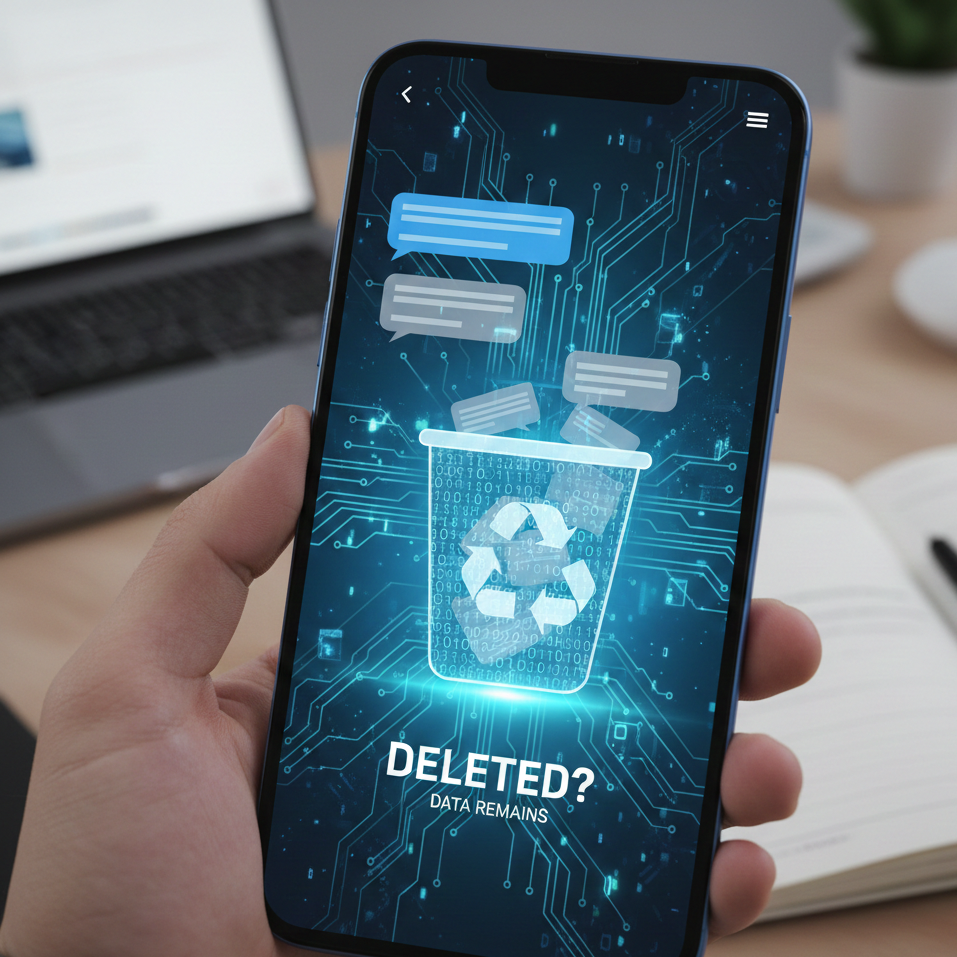
This happens more often than you’d think. So let’s talk about what “deleted” actually means when it comes to smartphone data—because it’s way more complicated than most people realize.
When You Delete a Message, Where Does It Go?
Here’s the thing: when someone deletes a text message from their phone, it doesn’t just disappear into the ether. But it also doesn’t stick around forever with a nice little flag that says “Hey, I was deleted!”
What actually happens depends on several factors:
∙ What type of phone it is
∙ What app they were using
∙ Whether the device backs up to the cloud
∙ How much storage space is available
∙ How much time has passed since the deletion
All of these variables matter, and they can dramatically affect what a forensic examiner can and can’t recover.
The iCloud Factor Everyone Forgets
iPhones present a unique challenge because of iCloud. Most iPhone users have iCloud enabled—often without even realizing it. When they do, their messages sync across all their devices and up to Apple’s servers.
Here’s the critical part: when someone deletes a message on their iPhone, it also deletes from iCloud and all their other devices. If that message was never backed up to iCloud in the first place, it’s gone. Not hidden somewhere, not recoverable with special software—just gone.
But if a message was backed up before deletion, it might still exist in that iCloud backup. The catch? You need access to that iCloud account, and you need to know when those backups happened relative to when the deletion occurred.
I’ve worked on cases where attorneys assumed their forensic expert had thoroughly examined all available evidence, only to discover later that they’d only looked at the physical device. They never checked iCloud at all. That’s potentially leaving critical evidence on the table.
Android: The “It Depends” Operating System
If iPhones are complicated, Android devices are even more so. There are dozens of manufacturers, each with their own backup systems and data storage methods.
You might be dealing with:
∙ Google Photos
∙ Samsung Cloud
∙ Carrier-specific backups
∙ Third-party backup apps
∙ Manufacturer-specific features
Plus, Android’s file system works differently than iOS. Sometimes deleted data lingers in unallocated space for a while. Sometimes it gets overwritten almost immediately. A lot depends on the specific device model, how full the storage is, and how the phone’s been used since the deletion.
What This Means for Your Case
If you’re handling a case where deleted messages matter, here’s what you need to know:
Don’t assume the physical device is the whole story. Cloud backups can contain data that’s been deleted from the device itself. Make sure your expert has checked all possible sources.
Timing matters enormously. When was the data deleted relative to when backups occurred? When was the device seized relative to the deletion? These timelines can determine what’s recoverable.
Not all deletions are intentional. Storage optimization features, app updates, and automatic cleanup processes can all make data disappear without any human intervention.
Questions to Ask Your Expert
When you’re working with a forensic examiner on a case involving potentially deleted data, ask:
∙ Did you examine cloud backups, or just the physical device?
∙ What specific artifacts are you relying on to conclude data was deleted?
∙ Can you rule out other explanations for why this data is missing?
∙ What’s your confidence level that this was intentional deletion versus automatic cleanup?
These aren’t gotcha questions. They’re the questions that help you understand what you’re actually dealing with and how strong your evidence really is.
The Bottom Line
“Deleted” isn’t as simple as it sounds when it comes to smartphones. Before you build a case around the theory that someone intentionally destroyed evidence, make sure you understand what actually happened to that data and whether there are innocent explanations.
A good forensic expert will walk you through the possibilities and be honest about what they can and can’t prove. If someone’s giving you absolute certainty about deleted data without explaining their methodology, that’s a red flag.
Have questions about a specific case? Feel free to reach out. Sometimes it helps to have a fresh set of eyes on the evidence.